Physical Computing
Module 1: Activities and Research
Haolin Wu
Module 1
Activity Research
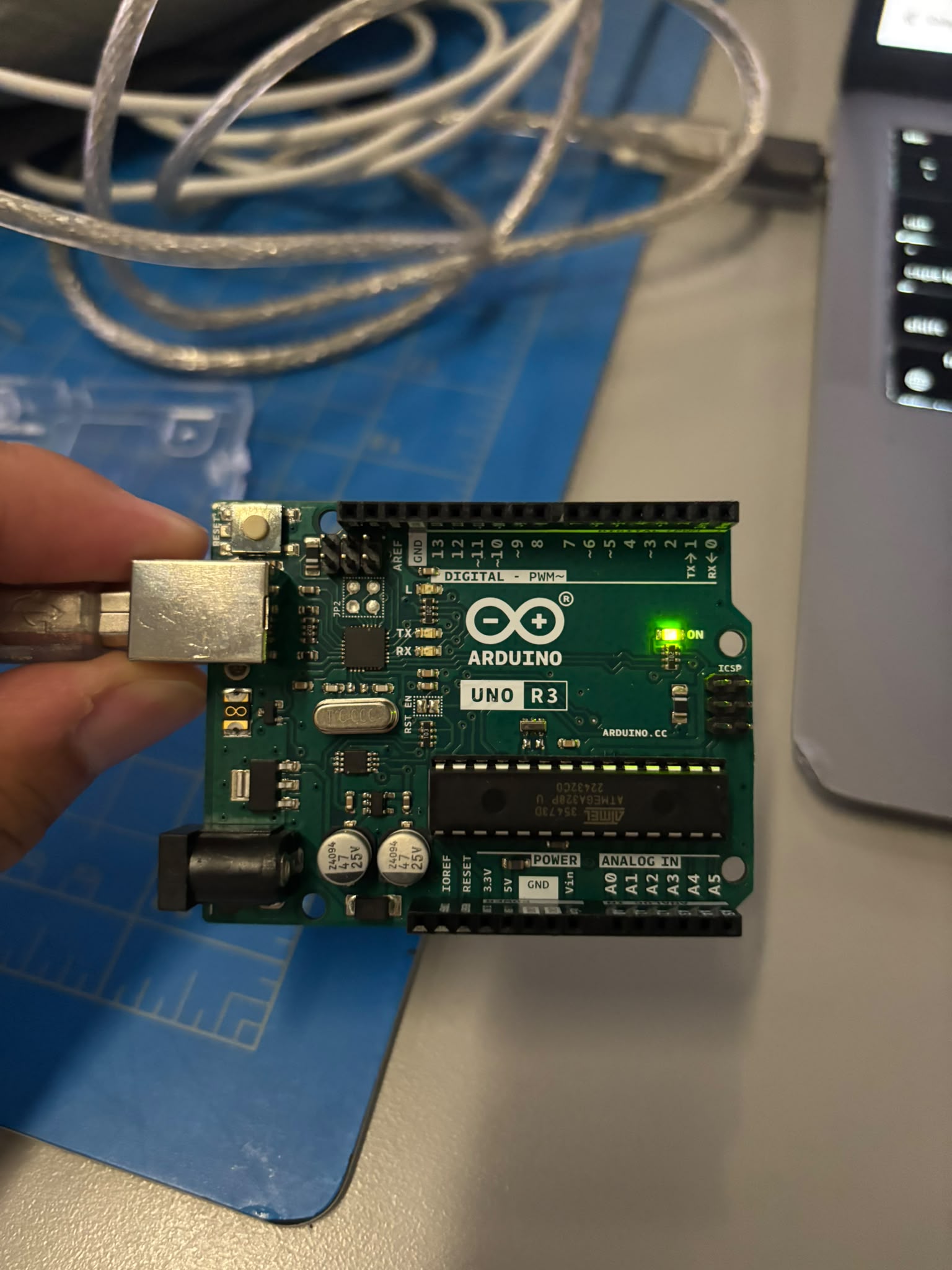
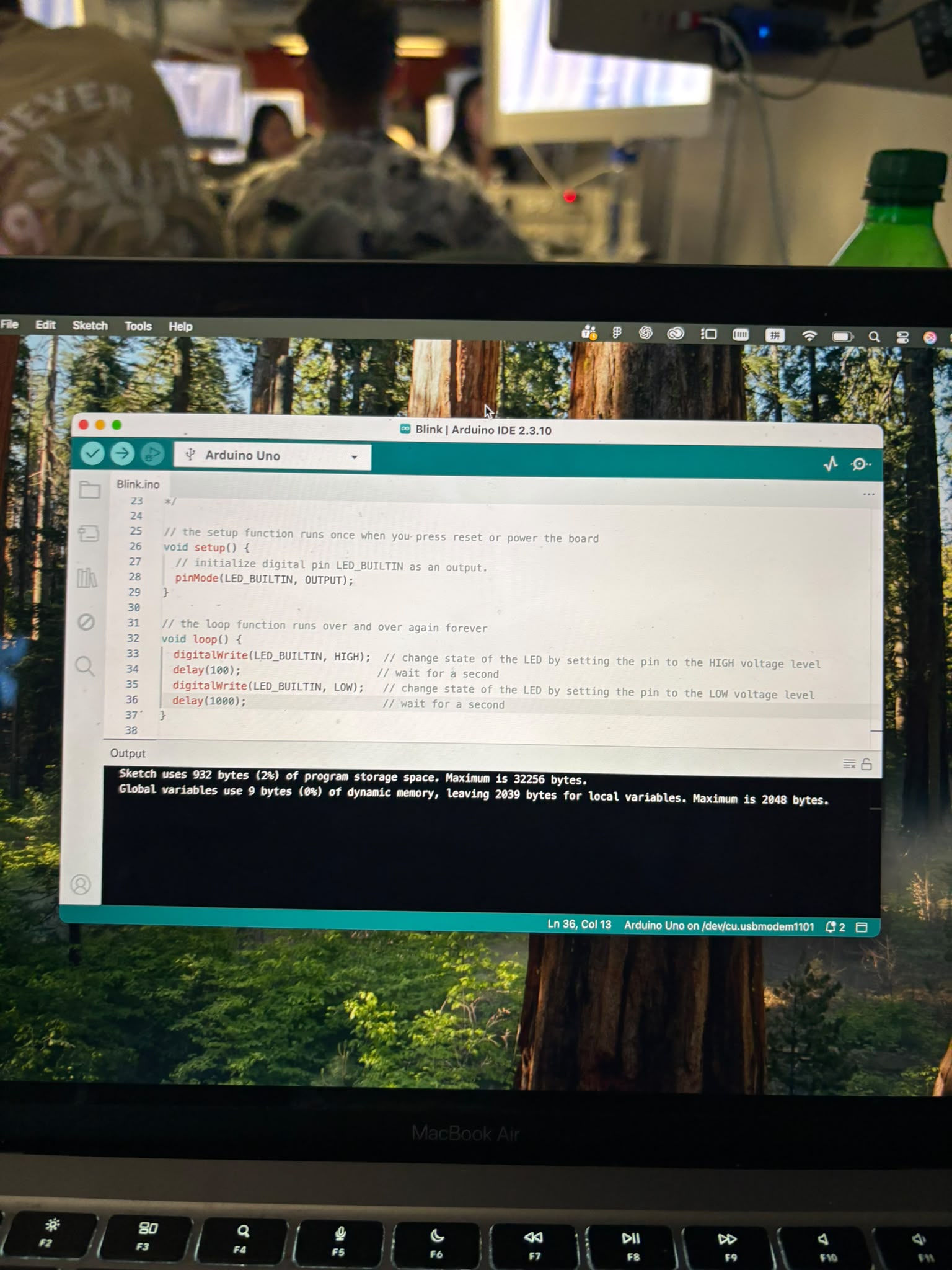
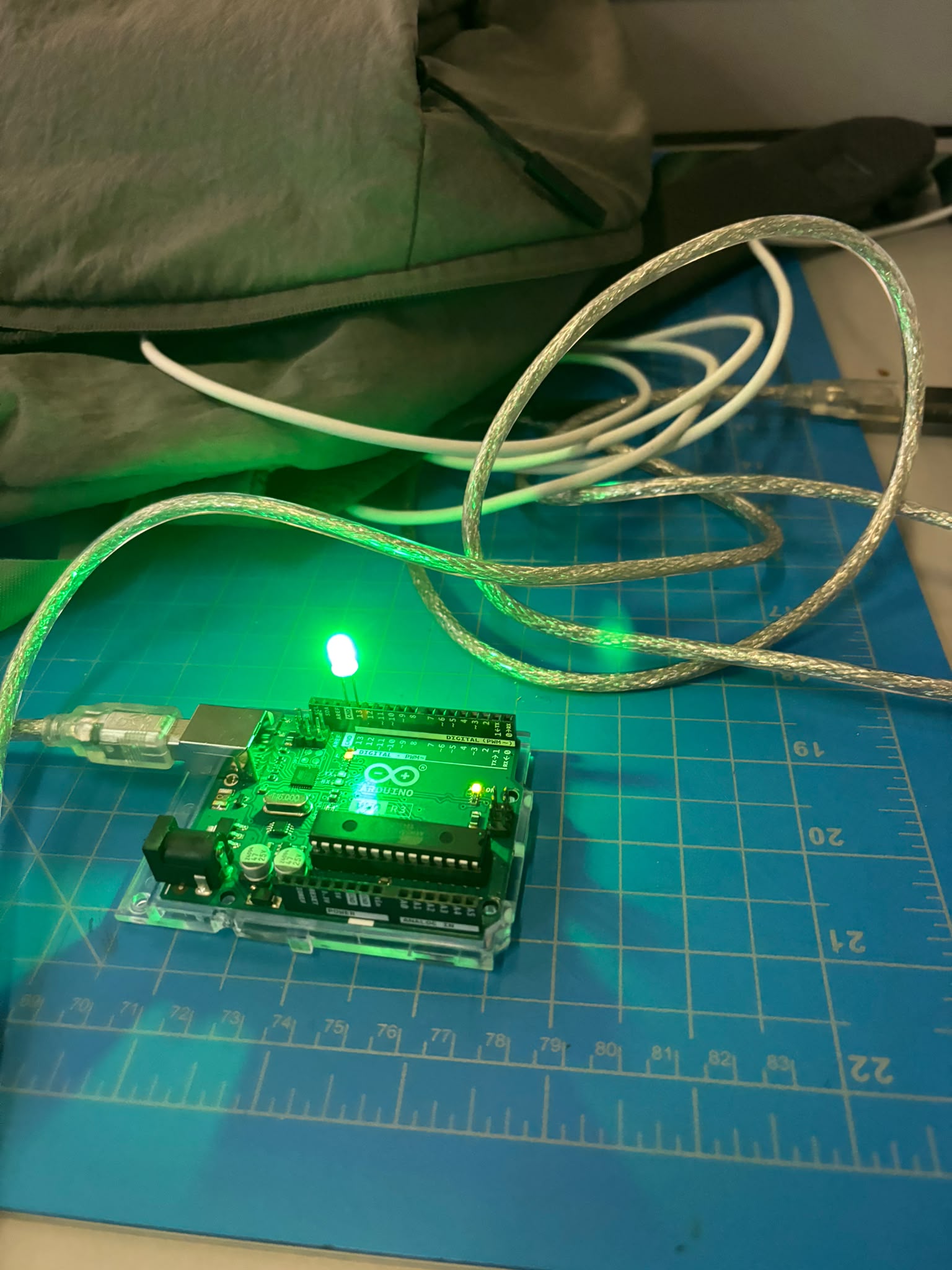
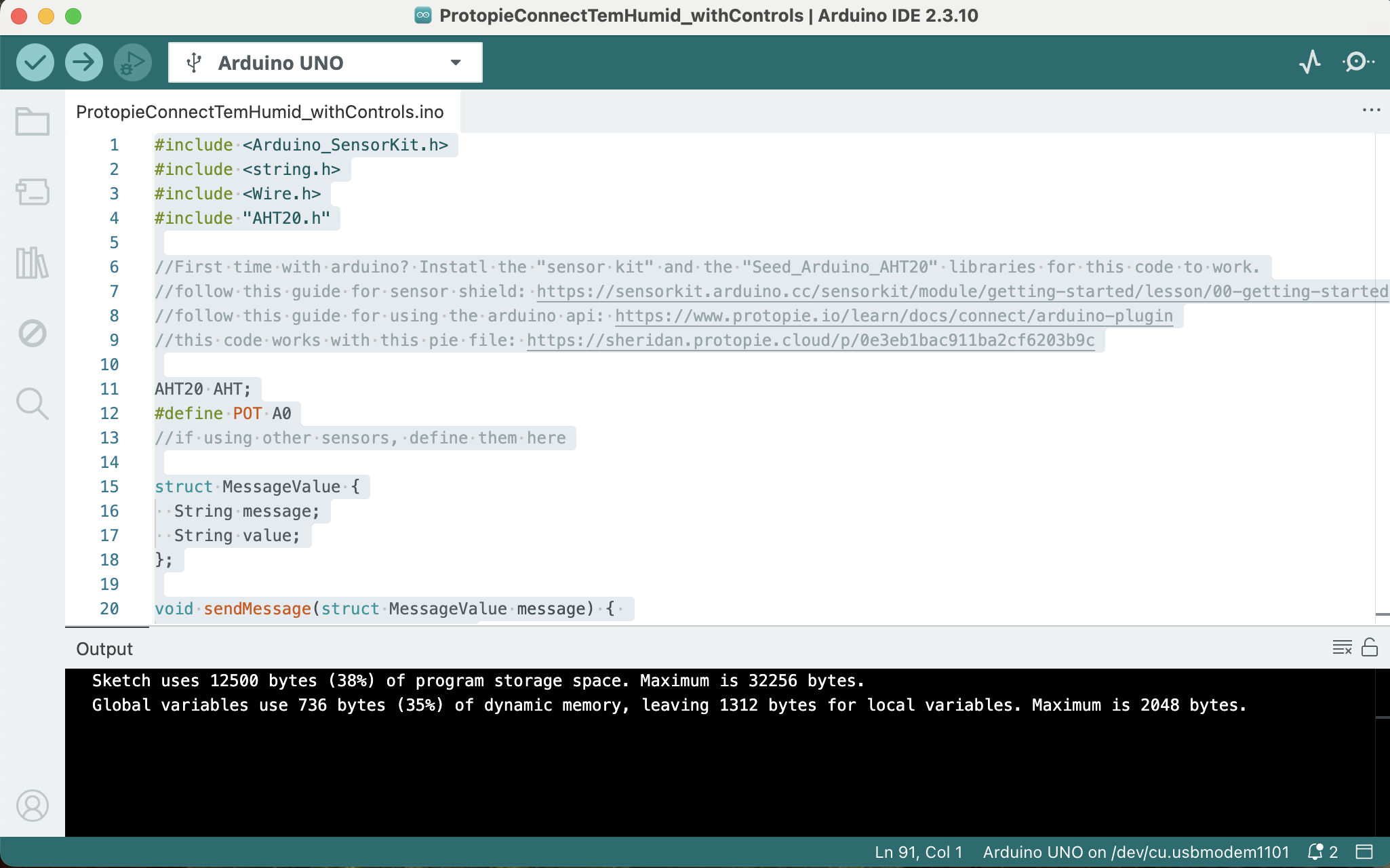
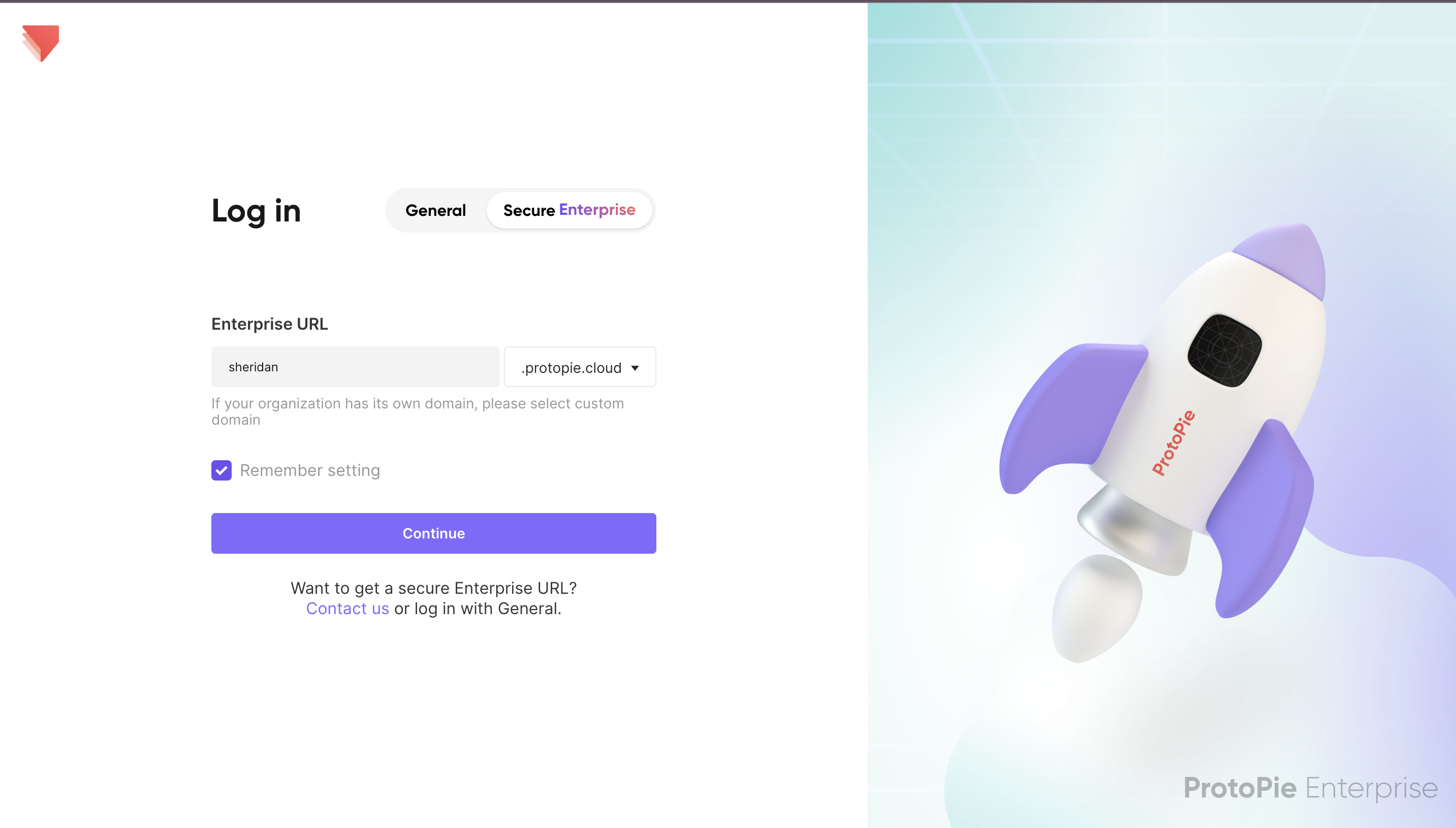
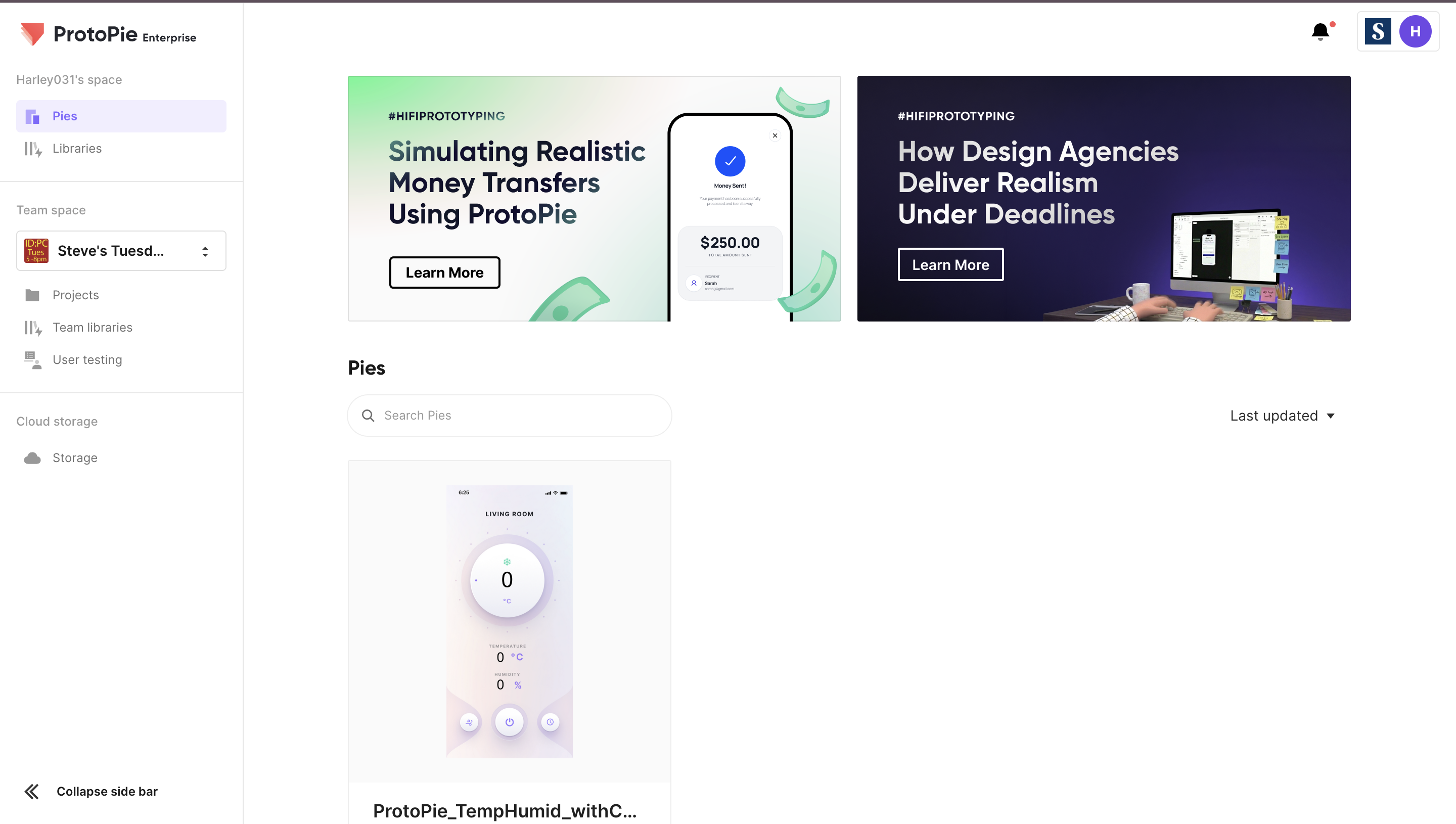
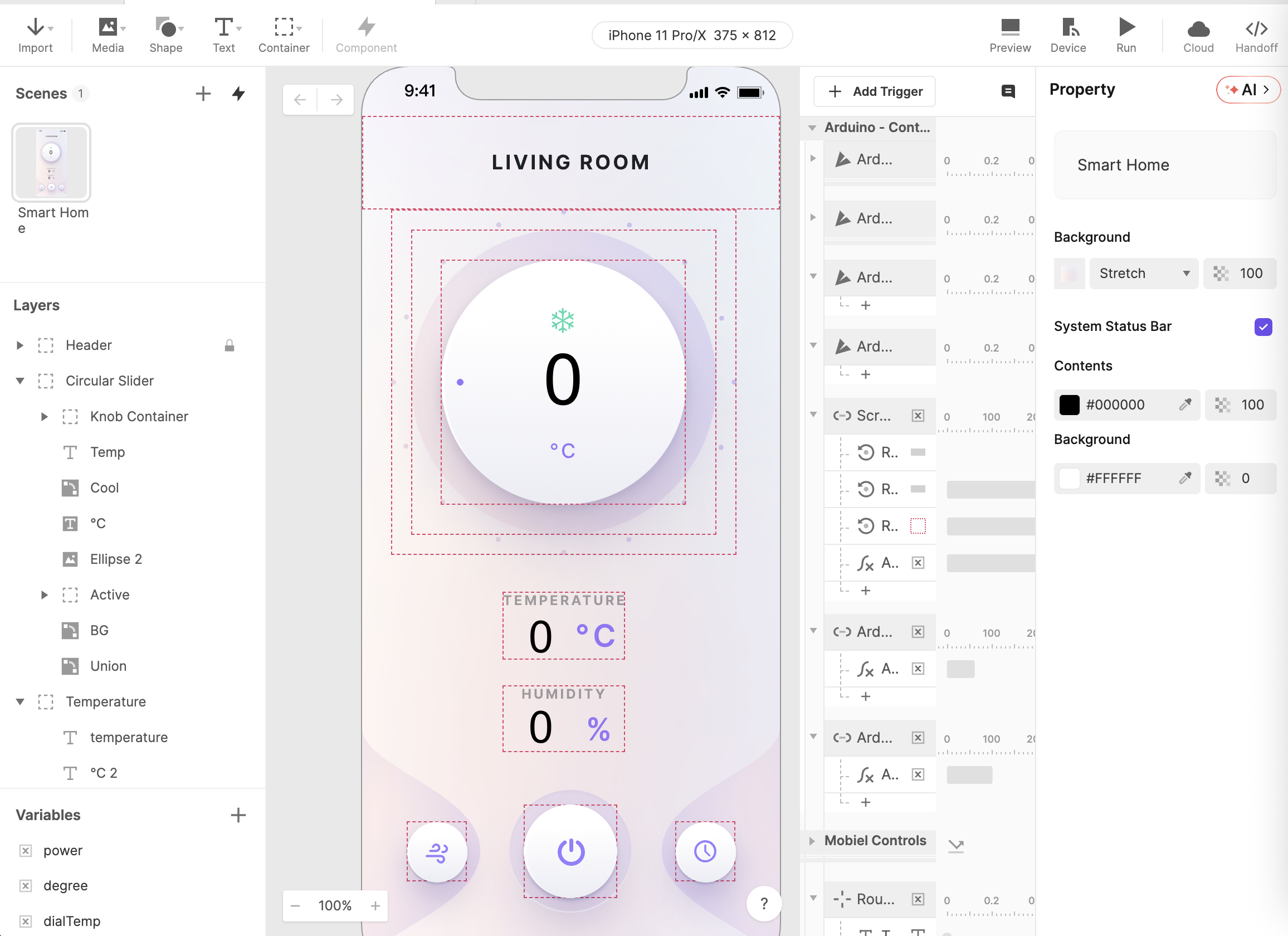
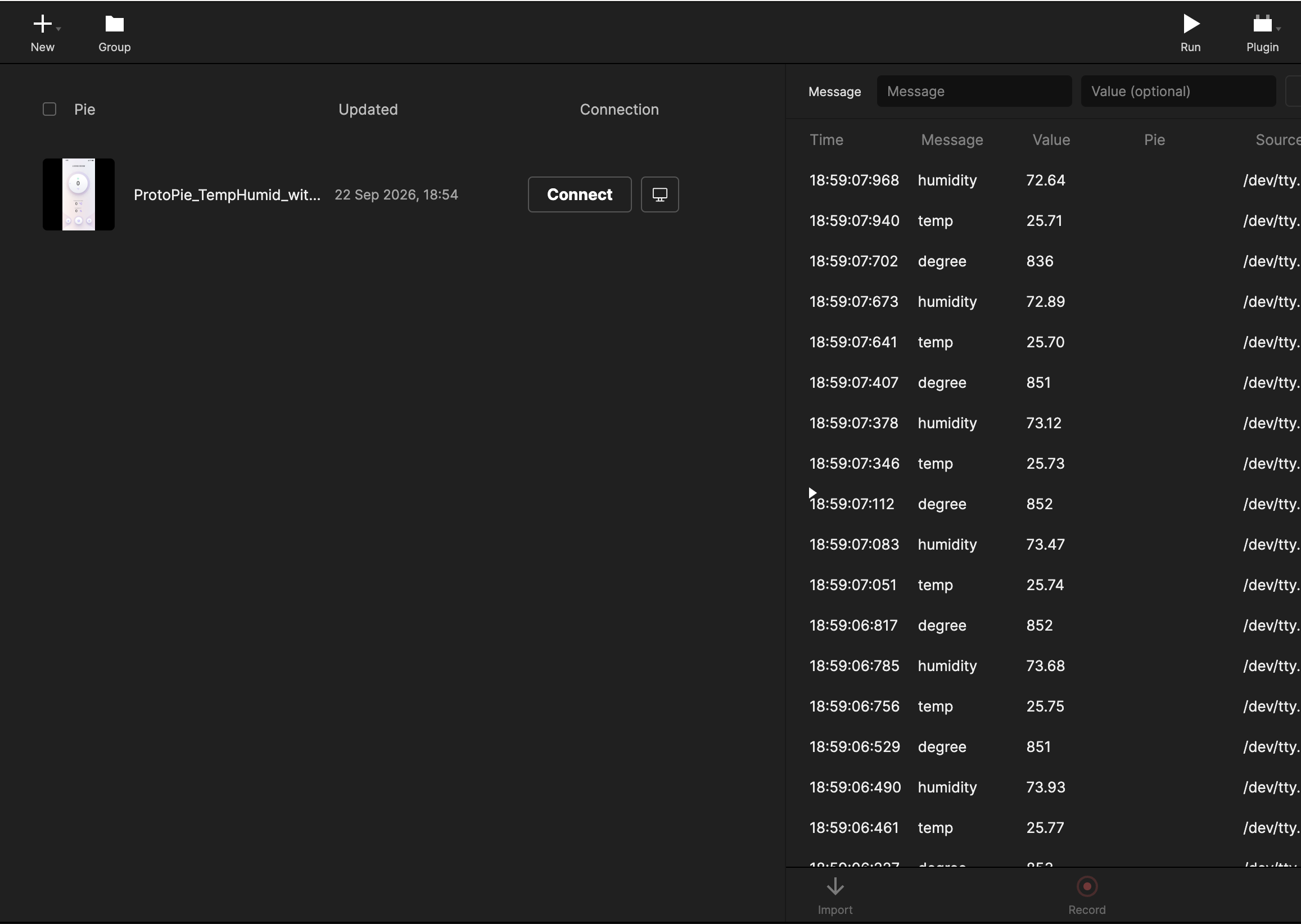
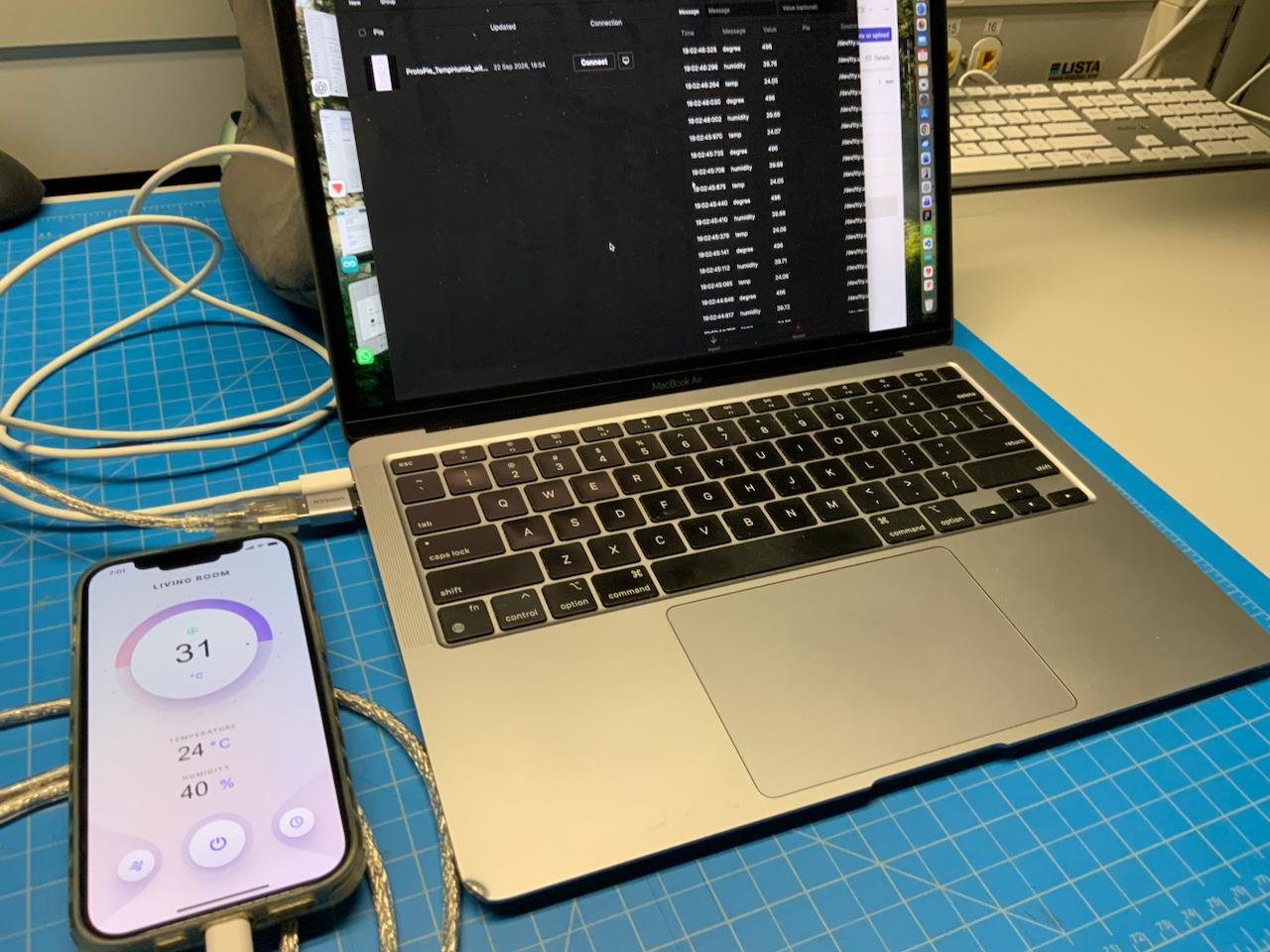
This website documents my Module 1 activities and research. In Activity 1, I tested the Arduino and ran code to control a small LED. In Activity 2, I accessed the ProtoPie link provided by my instructor and tested its connection with the Arduino. My research explores screen-free focus and rest, and flexible home spaces. Activity 3 explores Arduino serial input and visual output in TouchDesigner.
Activity 1
Activity 2
Activity 3
.jpeg)
.jpeg)
.jpeg)
.jpeg)
.jpeg)
Research Activity
Consumer Trend Research
I explored two home trends: screen-free focus and rest (2028), and flexible spaces for work and relaxation (2027). TrendBible inspired both directions. Pew reports that 70% of U.S. adults aged 18–29 feel they overuse their phones, while 75% of U.S. workers with teleworkable jobs work remotely at least sometimes. These findings informed my Focus Dock and Home Mode Controller ideas.
.png)
.png)
.png)
Personas Research
Alex is a young adult who wants to focus at home with fewer phone distractions. Jordan is a hybrid worker who wants to switch a shared space between work and rest. These are provisional personas based on research; their needs and buying preferences still need to be tested.
.png)
.png)
.png)
HMI Research
How might I help young adults focus and take breaks without another screen? How might I help people switch a shared home space between work and rest? These questions guide my initial concepts.
.png)
.png)
.png)
Project Path
I will work individually on the Design path. I chose Focus Dock because it builds on my Arduino LED experiment and has a manageable scope. Home Mode Controller remains an alternative concept.
.png)
.png)
.png)
Project 1 Concept
Project 1 Concept
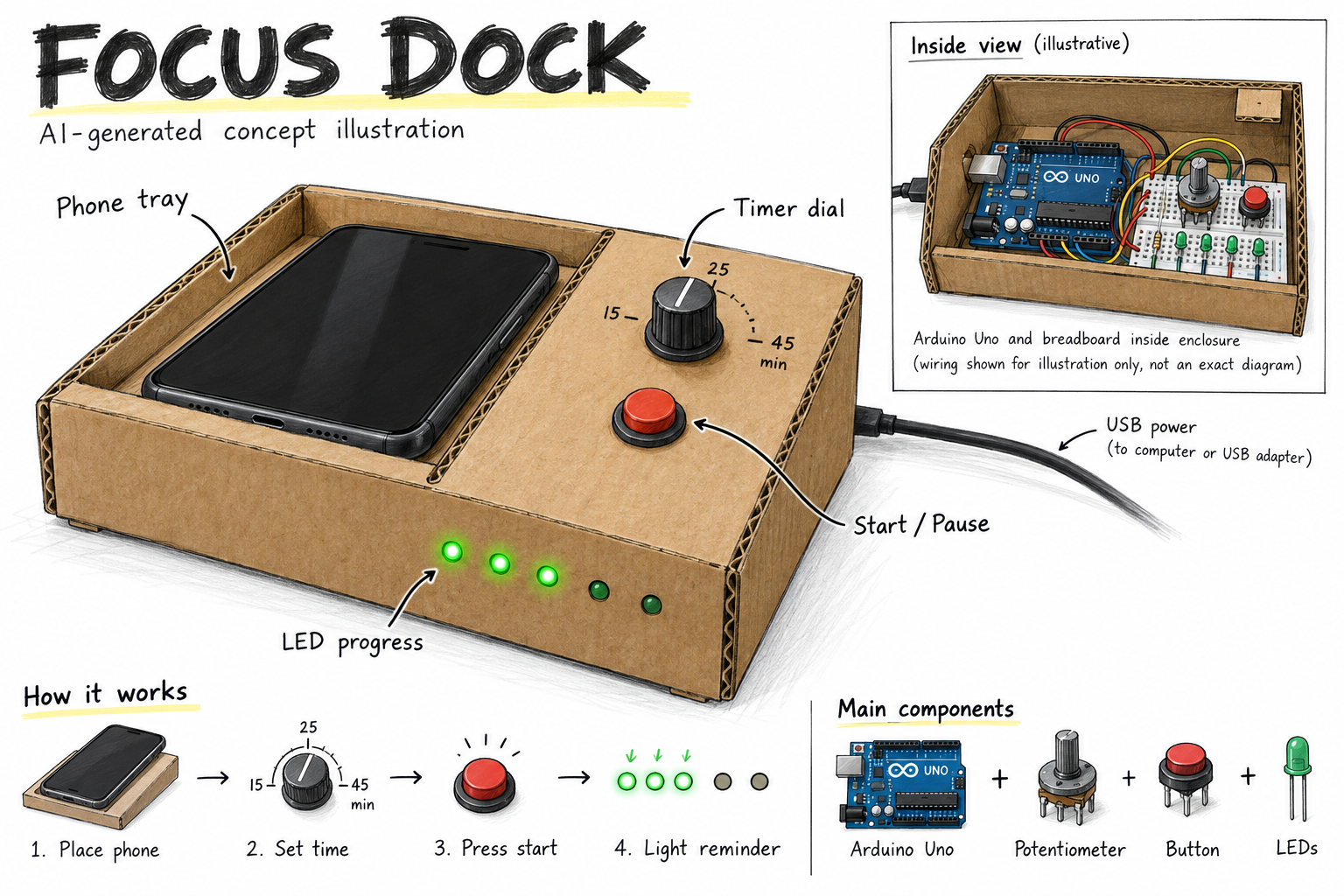
Focus Dock is my individual Design concept for screen-free focus and rest. Users place their phone on the dock, set a timer with a dial and press a button to start. LED lights show progress and signal when it is time for a break. The concept builds on my Arduino light and potentiometer experiments. I used AI to generate the concept illustration.